
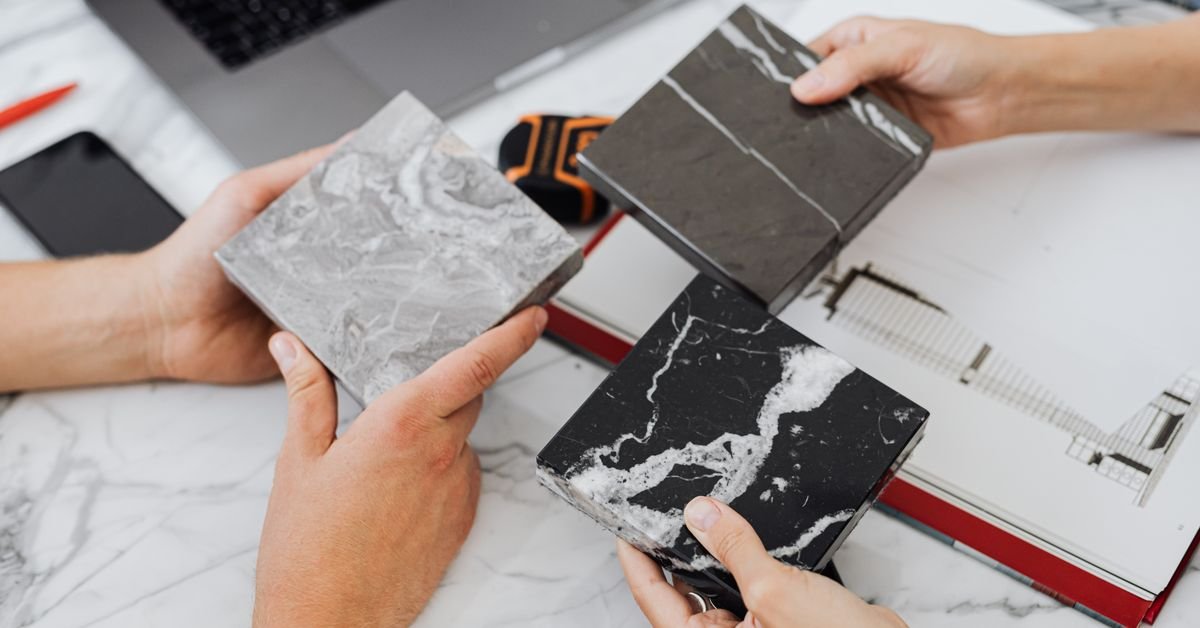
Marketing for Tiles and Sanitaryware Brands: Early Specification

If you manufacture or distribute tiles, marble, granite or sanitaryware in India, you know the pain: your products are only as strong as the architect or interior designer who specifies them. By the time dealers and contractors enter, the real decision is already locked. Yet most brands are invisible where these decisions are made, on Instagram, Pinterest and Google. Marketing for tiles and sanitaryware brands is now a question of being discovered before your competitor, not just stocked.

We see this every week: brands from Kishangarh marble or Morbi tiles clusters with brilliant products, but no digital catalogue, no Instagram showroom, no architect outreach marketing. No wonder big projects go elsewhere. If you want those B2B project leads, you must win the specification stage online, not just offline through dealers.

TL;DR

  • Architects and designers choose tiles, marble and sanitaryware brands long before contractors or buyers see your samples.
  • Instagram, Pinterest and Google are the new showrooms: if your digital catalogue is missing, you won’t get specified.
  • Architect outreach marketing and digital product showcases directly influence B2B project leads in India’s key clusters.
  • Strong dealer networks still matter, but only if you support them with digital marketing that wins early specification.

What is the main challenge in marketing for tiles and sanitaryware brands?

Brands in India’s tile, marble and sanitaryware sector get specified by architects and interior designers early in the project cycle; if you are not visible on digital channels like Instagram, Pinterest and Google, you miss out on project specification and B2B leads.

Understanding the Indian tiles and sanitaryware market landscape

The Indian tiles, sanitary ware and bathroom fittings market is huge, with growth driven by urban projects and design-led buyers. Rajasthan’s Kishangarh marble and Gujarat’s Morbi tiles clusters are at the core, supplying the bulk of India’s building materials. Yet while production is world-class, marketing is often stuck in the past: factory visits, dealer meets, and paper catalogues. The real fight for specification now happens online.

Project specification starts with architects and interior designers who shortlist brands using Instagram, Pinterest and Google. If you’re not present on these channels, you’re invisible. With e-commerce and digital discovery transforming the ceramic sanitary ware market, brands need to be proactive. Professional digital marketing for tiles and sanitaryware brands is no longer optional. See Spherical Insights for more on how digital platforms are changing the market.

Here’s what that means for your business:

  • You’re competing with national leaders like Kajaria, Somany and H&R Johnson, who invest heavily in digital showrooms.
  • Dealers and contractors now expect digital catalogues to share with clients; your PDF brochure is not enough.
  • B2B buyers and designers check Instagram before requesting samples or a site visit.
Key Clusters Specialisation Digital Marketing Gaps
Kishangarh (Rajasthan) Marble, Granite Weak Instagram presence, outdated websites
Morbi (Gujarat) Tiles (Ceramic, Vitrified) No digital product catalogue, low brand recall

This is the context in which your marketing decisions matter.

Why do architects and interior designers hold specification power?

Architects and interior designers aren’t just influencers; they are the actual decision-makers for project specification. By the time your dealer or contractor is involved, the brand list is already fixed. If you don’t reach architects and designers directly, your products will not be considered, no matter how strong your dealer push.

How they work

Designers typically create a shortlist of brands by browsing Instagram, Pinterest, Google and digital catalogues. They share these with clients and contractors, locking in the choices before the first site visit. If you’re missing from their digital ‘moodboards’, you’re out of the project.

Why this matters for your brand

  • Specification is rarely changed after approval, so being late to the architect means being locked out.
  • Designers look for high-quality visuals, technical specs and easy sample requests, not just price.
  • Influencing the architect or designer means influencing the entire project supply chain.

Which digital channels influence early specification for building materials?

If you want to get specified early, you must be visible where architects and designers search: Instagram, Pinterest and Google. Each channel serves a unique role in building materials digital marketing.

Instagram: The virtual showroom

Instagram is where architects and designers shortlist trends, colour palettes and specific brands. A well-curated Instagram showroom, with tagged products and project photography, is now expected. Hash-tagging, location tags (eg #KishangarhMarble #MorbiTiles), and story highlights help your products surface in searches.

Pinterest: Moodboards and inspiration

Pinterest is the digital moodboard for interior designers. If your marble or tile collections aren’t on Pinterest, you’re missing out on project inspiration boards where architects collect ideas for clients. Pins should link directly to detailed product pages or digital catalogues.

Google: Discovery and validation

Google search is used for initial discovery and technical validation. If your website doesn’t appear for relevant queries (“best Morbi tiles”, “Kishangarh marble supplier”), you lose the project before you even know it exists. Google My Business listings with updated project photos and reviews further build trust.

Channel Role in Specification Must-Have Content
Instagram Showroom, trend discovery Project photos, tagged products, stories
Pinterest Moodboards, inspiration Pins linking to product pages
Google Search, trust, validation SEO pages, GMB, reviews

To see how B2B brands in India are shifting from Meta Ads to Google Ads, check our post on Meta Ads vs Google Ads for B2B lead generation.

How do you create compelling digital product catalogues and Instagram showrooms?

For marble company marketing and tile brands, your digital product catalogue is your first sales pitch. It must make it easy for architects and interior designers to shortlist and specify your products, without chasing your sales team for information.

Checklist: What your digital product catalogue needs

  • High-resolution images of every product in real settings
  • Technical specs (sizes, finishes, applications) in downloadable format
  • Project galleries showing completed work
  • Easy-to-use filtering (by colour, material, application)
  • CTA for sample requests or architect support
  • Mobile-friendly layout for on-site access

Your Instagram showroom should mirror this catalogue: highlight key collections in stories, tag products, and always show real projects (not just renders). Use IGTV or Reels to explain installation details or design tips. If you want to see how B2B websites lose leads without strong catalogues, our article Your B2B Website Is Losing You Deals Before You Even Get on a Call breaks down the technical gaps.

Must-Have Feature Impact
Real project images Builds credibility and inspires designers
Downloadable specs Makes specification easy for architects
Mobile-optimised design Accessible on site and on the go

What architect outreach marketing works for tile and sanitaryware brands?

Architect outreach marketing is about building trust and recall with the decision-makers who influence project specification. This isn’t generic advertising, it’s targeted, relationship-led digital engagement.

Effective steps for architect outreach

  1. Identify key architects and interior designers in your project geography (eg Mumbai, Delhi, Bangalore, Dubai, Singapore)
  2. Connect via Instagram DMs, LinkedIn or targeted email (not spam, but value-driven introductions)
  3. Share digital catalogues, new launches, and sample offers tailored for architects
  4. Host online events: design webinars, Q&A sessions, or virtual factory tours
  5. Follow up with project galleries and use testimonials from architects you’ve worked with

Create a strong architect-only section on your website for technical details, case studies and sample requests. For more on shortening B2B cycles, see content marketing for Indian B2B companies.

How can dealer networks drive lead generation in building materials?

Dealers are your feet on the ground, but they’re only as strong as your digital support. Dealer lead generation building materials now happens when your brand is specified by architects and requested by clients. The traditional dealer model works best when combined with digital pull.

Dealer support strategies

  • Equip dealers with digital catalogues and sample kits for quick sharing
  • Provide WhatsApp or web-based tools for real-time stock and pricing queries
  • Encourage dealers to tag your brand in their own Instagram posts and stories
  • Share project leads generated from architect outreach with your best-performing dealers
  • Run dealer contests for digital engagement (eg most Instagram posts, most architect meetings)

When your brand is top-of-mind for both architects and dealers, you close the gap between specification and final sale.

Case study focus: Kishangarh marble and Morbi tiles clusters

Kishangarh (Rajasthan) and Morbi (Gujarat) are India’s powerhouse clusters for marble and tiles. Despite leading in production, most brands here have weak digital presence, classic missed opportunities. This is where marketing for tiles and sanitaryware brands can make a real impact.

Situation we see on the ground

  • Many marble companies in Kishangarh have no Instagram or Pinterest presence, or post only generic catalogue images.
  • Morbi tile manufacturers often lack a digital catalogue, making it hard for architects to specify their ranges.
  • Dealers in metros complain that clients demand brands seen online, not just what’s locally available.

Brands that invest in digital product showcases, architect outreach and dealer enablement see higher B2B project leads and better recall. If you want to understand why brand identity matters for B2B, our post Why Indian B2B Companies That Invest in Brand Identity Close Deals Faster explains this shift.

Integrating digital and dealer marketing to win early specification

If you want your tiles, marble or sanitaryware brand to be specified by architects and designers, your digital marketing and dealer strategies must work together. A strong digital product catalogue and Instagram showroom get you shortlisted; architect outreach builds relationships; dealer enablement closes the loop.

We help brands in India’s building materials clusters win at every stage, from digital presence audits to end-to-end social media marketing and SEO for tiles and sanitaryware brands. The brands that move first, get specified first.

Key takeaways

  • Architects and designers hold real power in product specification, reach them early online.
  • Instagram, Pinterest and Google are now the primary showrooms for building materials.
  • A strong digital product catalogue is essential for B2B project leads.
  • Architect outreach marketing builds brand recall and trust.
  • Dealer networks succeed when supported by digital marketing for tiles and sanitaryware brands.
  • Brands in Kishangarh and Morbi clusters can win by bridging digital gaps now.

Frequently asked questions

What are the top marketing strategies for sanitaryware brands in India?

The top strategies include building a digital product catalogue, creating an Instagram showroom, running targeted architect outreach campaigns, and supporting dealers with digital tools. Early visibility to architects and designers is essential for winning project specification.

How do architects influence tile and marble product choices?

Architects and interior designers create the specification list for projects, often before any dealer or contractor is involved. Their choices are based on digital catalogues, project galleries, and trends they follow on Instagram and Pinterest.

What role does Instagram play in marketing building materials?

Instagram acts as a virtual showroom for tiles, marble and sanitaryware brands. Architects and designers use it to discover new trends, view real project photos, and shortlist products for specification. High-quality content here drives B2B leads.

How can dealers generate leads in the tile and sanitaryware industry?

Dealers generate more leads when supported by digital product catalogues, easy sample tools, and project leads shared from architect outreach. Digital engagement (WhatsApp, Instagram) also helps dealers connect with new buyers and designers.

What is the significance of Kishangarh marble and Morbi tiles in India?

Kishangarh in Rajasthan is a major hub for marble and granite, while Morbi in Gujarat leads in tile manufacturing. Both clusters supply most of India’s building materials but often lack strong digital marketing, missing early specification opportunities.

How to create a digital product catalogue for tile and sanitaryware brands?

Start with high-resolution project photos, technical specs, and downloadable datasheets. Structure the catalogue for easy filtering by type, colour, and application. Make it mobile-friendly and link it to your Instagram showroom and website enquiry forms.

Ready for a free digital presence audit?

If you want more project leads from architects and interior designers, start with a free architect-facing digital presence audit from our team. We’ll show you exactly where your digital product catalogue, Instagram showroom and architect outreach can improve. Book your audit now and get specified first.

Published by

Trizom Private Limited

A full-service digital marketing company in Jaipur helping businesses in India, the UAE, Singapore and Australia turn search, ads and content into qualified leads.
Our services  |  Talk to our team

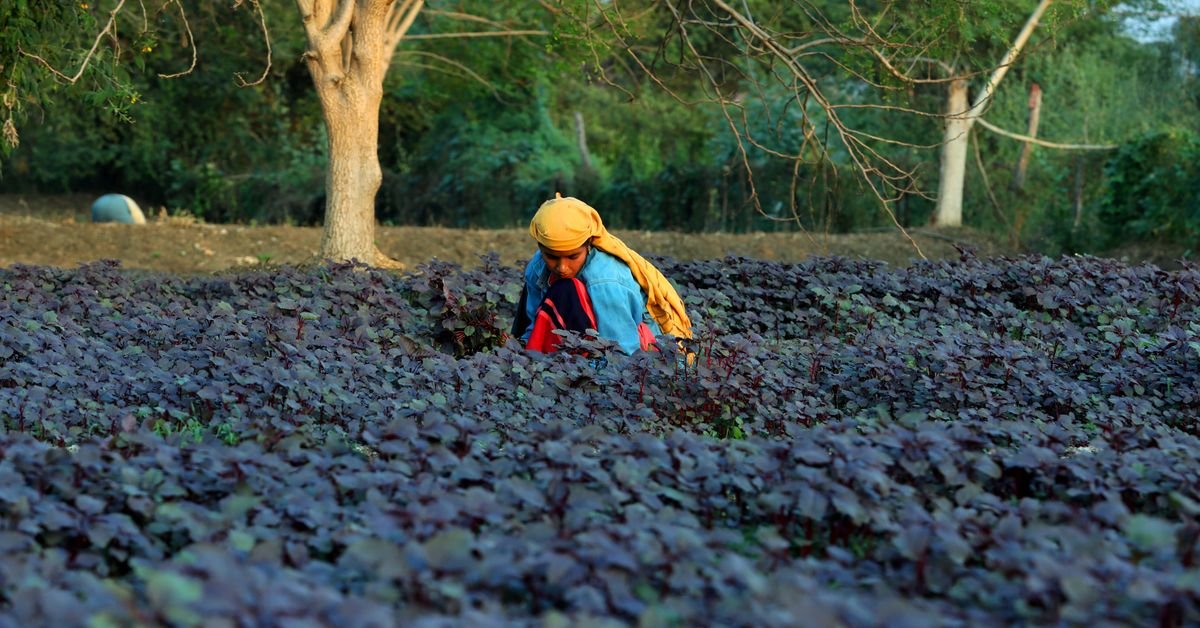
Digital Marketing for Agri Input Companies: Build Farmer Pull

If you’re leading marketing or sales at a seed, fertiliser, bio-stimulant or crop protection company in India, you know the pain: digital marketing for agri input companies sounds promising, but your dealer network still calls the shots at the counter. Dealers push whatever earns them the best margin, not what the farmer asks for. The result? Even if you’ve done the hard work of building a distribution network, without farmer-level brand recall, your product is just one option among many.

Every rabi season, your sales targets hang in the balance. You pour resources into incentives for dealers and retailers, but the minute a competitor offers a bigger bonus, your shelf space shrinks. Meanwhile, the farmer, the true end user, might never have even heard your brand name, let alone asked for it by name. In this environment, digital marketing isn’t a nice-to-have; it’s your best shot at breaking the cycle and building real pull demand.

TL;DR

  • Dealer push dominates at the counter, undermining your sales despite a strong distribution network.
  • Digital marketing for agri input companies can create farmer-level brand recall and pull demand, especially during rabi season.
  • Strategies like regional language content, WhatsApp engagement, and YouTube demo videos make your brand visible and trusted with farmers.
  • Integrating digital and dealer efforts can tip the balance from push to pull and drive higher conversion at the shelf.

What is the real challenge for agri input brands in India?

The main challenge for agri input brands in India is that dealers and retailers often push higher-margin competitor products at the counter, leaving your brand invisible to farmers and making pull demand almost impossible to build. To counter this, brands must invest in digital marketing for agri input companies, using regional content, WhatsApp, and timed rabi season campaigns to increase farmer awareness and preference.

Understanding the Indian agri input market and dealer network dynamics

India’s agri input market is massive, fragmented, and dealer-driven. Even the best products struggle if farmers aren’t asking for them by name. Dealers and retailers have the power to influence buying decisions at the counter, often swayed by incentives and margin structures, not product efficacy or farmer preference.

How does the retailer counter push work?

Your field team can only do so much. The moment a farmer enters the shop, the retailer may steer the conversation towards a brand that gives better margins or a current promotion. If your brand doesn’t have pull, you’re reliant on the dealer’s goodwill, or your latest incentive scheme.

Why is farmer brand recall so low?

Most farmers hear about brands from their local retailer or dealer, not from advertisements or field demos. Traditional marketing efforts like hoardings, van campaigns, or small events rarely reach enough farmers, especially in rural and semi-urban settings. Without a direct channel, your brand gets lost in the noise.

What’s unique about the rabi season?

October and November mark the rabi sowing season, the narrow window when seed and fertiliser purchases peak. If your brand isn’t top of mind before and during this window, you’ve missed your shot for the year. Dealer incentives alone can’t guarantee shelf presence or farmer demand at this critical time.

Dealer Network Dynamics
High dealer and retailer influence at point of sale
Margin and incentive driven product recommendations
Fragmented rural distribution
Low farmer brand recall without direct engagement

Why digital marketing is a game changer for seed and fertiliser brands

Digital marketing for agri input companies lets you bypass traditional bottlenecks and speak directly to farmers, creating pull demand that dealers can’t ignore. According to this peer-reviewed study, digital marketing offers an unprecedented opportunity for agribusinesses to grow, innovate, and connect with their audience in meaningful ways.

How does digital marketing shift the power balance?

When farmers come in asking for your brand by name, the dealer’s margin game weakens. Digital platforms, especially social media, WhatsApp, and YouTube, let you build strong farmer awareness at scale, even in remote areas. Your message isn’t filtered or diluted by intermediaries.

What does digital marketing look like in agri?

  • Regional language digital content that is easy to understand and relevant to local crops and conditions
  • WhatsApp marketing for farmers, delivering tips, demo videos, and product updates straight to their phones
  • YouTube demo and crop advisory content showing real results in their region
  • Campaigns timed for rabi season, so your brand is top of mind during the peak buying window

Why now?

Smartphone penetration and mobile data access are no longer urban luxuries. Rural India is online, watching videos, sharing WhatsApp forwards, and searching for crop advice. Brands that act now will dominate recall for the next decade. Those who wait risk permanent invisibility.

Building farmer brand recall: regional language content and WhatsApp marketing

You can’t build pull demand with English-only Facebook posts or generic YouTube ads. To create farmer brand recall, you need to speak the farmer’s language, literally. Regional language content and WhatsApp marketing for farmers are your most powerful tools.

Why regional language content matters

Farmers trust information that feels local and relatable. Videos, infographics, and crop advisory content in Hindi, Marathi, Gujarati, Telugu, Tamil and other regional languages cut through the noise. They reach farmers who’d never read a brochure in English or respond to a city-style ad.

  • Focus content on key crops and local pains (e.g. wheat seed selection in Punjab, soil health advice in Maharashtra)
  • Use real farmer testimonials, not actors or generic stock footage
  • Answer common questions about dosage, application timing, and compatibility with other agri inputs

WhatsApp marketing for farmers: the practical approach

WhatsApp is the real social network in rural India. Forwarded videos, images, and short voice notes travel village to village in minutes. A well-timed crop advisory or demo video can reach thousands with zero media spend.

  • Build segmented WhatsApp lists by crop, geography, or farmer type
  • Share short, actionable tips and demonstration videos, not just product pitches
  • Encourage farmers to save your number and share feedback or queries directly
  • Use WhatsApp status updates to showcase results, festivals, and rabi season tips

Worked example: WhatsApp campaign for rabi wheat seed

  • Send a 40-second video in Punjabi showing a local farmer talking about higher yields with your seed
  • Attach a simple infographic (in Gurmukhi script) showing sowing dates and fertiliser recommendations
  • Include a call to action: “Ask your dealer for Brand X this rabi!”

Leveraging YouTube demo videos and crop advisory content to educate farmers

Education builds trust. When it comes to fertiliser brand marketing or seed company marketing strategy, YouTube demo videos and expert crop advisory content can be your best conversion tools. These create both credibility and real farmer confidence.

Why YouTube demo videos work in agri marketing

Farmers want proof, not promises. Seeing a real crop field, a side-by-side comparison, or a respected local agronomist using your product is far more persuasive than any printed flyer. YouTube is accessible and easily shareable, even on basic smartphones.

  • Keep videos short: 1 to 3 minutes works best
  • Use local language voiceover and subtitles
  • Show before-and-after results, clear application steps, and farmer interviews
  • Add a scrollable WhatsApp number and QR code for more info

Crop advisory content: moving beyond product pitches

The most effective agri brand social media in India doesn’t just sell; it educates. Share actionable tips: ideal sowing dates, fertiliser dosages, pest/disease alerts, and best practices for the rabi season. Farmers become loyal when they see your brand as a trusted advisor, not just a seller.

Table: YouTube and Crop Advisory Content Ideas for Agri Input Brands

Content Type Example Region/Language
Demo Video: Wheat seed application “How to sow Brand X wheat seed for higher yield” Punjabi, Hindi
Fertiliser dosage explainer “Correct fertiliser use for rabi crops” Marathi, Hindi
Pest/disease alert “How to spot early signs of rust in wheat” Hindi, Gujarati
Farmer testimonial “Why I trust Brand Y for my rabi crops” Telugu, Tamil

Timing digital campaigns with the rabi season buying window

October to November is not just another quarter, it’s the rabi sowing season, the single most important buying window for seed and fertiliser brands. Your digital campaigns must be timed to reach farmers before dealers start pushing competitors at the counter.

When to start your rabi season marketing campaigns?

Begin digital farmer awareness campaigns about 4 to 6 weeks before sowing starts. This gives you time to build recall and let farmer queries percolate through WhatsApp groups and YouTube shares. By the time they’re ready to buy, your brand is already in their mind.

What to highlight in rabi campaigns?

  • Specific crop varieties best suited for the region
  • Demonstrated yield improvements from last season’s users
  • Clear sowing and fertiliser schedules
  • Dealer locator or WhatsApp helpline for product queries

Don’t waste budget on broad, generic ads. Focus on high-frequency, local-language content that solves farmers’ immediate questions about rabi crops.

Integrating digital strategies with dealer networks to create pull demand

Digital and dealer strategies are not mutually exclusive. In fact, the most successful fertiliser brand marketing and seed company marketing strategy is where digital drives farmer demand, and the dealer network converts that demand into sales.

How do you align digital with dealer push?

  • Share digital campaign plans and content with your dealers so they know what farmers will ask for
  • Use QR codes and WhatsApp numbers in retail stores, linking offline and online engagement
  • Reward dealers who report genuine farmer-initiated sales, not just volume pushed

Dealer training for digital era

Equip your dealers with digital content they can forward to their own farmer contacts. Short WhatsApp videos or advisory PDFs make them feel supported and part of your campaign, not sidelined by it.

Hybrid approach: worked example

Suppose your rabi season campaign focuses on a new wheat seed variety. Farmers see demo videos on YouTube and WhatsApp, then visit the local shop. Your dealer has a printed QR code at the counter, when scanned, it opens a WhatsApp chat with your field officer. Now the dealer is part of the digital loop, and your brand wins recall and trust.

For more on building a content-driven strategy, see our perspective on how Indian B2B companies use content marketing to shorten sales cycles.

Measuring success: metrics and KPIs for agri digital marketing

Farmer engagement is not a vanity metric. For agri input marketing in India, you must track the metrics that show real pull demand and conversion.

  • WhatsApp list growth segmented by region or crop
  • Video views and shares in target districts
  • Dealer-reported farmer enquiries and SKU-level sales data
  • Engagement rates on regional language posts and campaigns
  • Number of inbound queries from farmer-facing channels

Set up regular review cycles during the rabi season to double down on what works and pause what doesn’t. For more advice on tracking digital campaigns, see our social media marketing solutions for agri brands.

Key takeaways

  • Dealer push is the biggest barrier to agri input brand growth in India.
  • Digital marketing for agri input companies is essential to build farmer brand recall and pull demand.
  • Regional language content and WhatsApp engagement outperform generic campaigns.
  • YouTube demo videos and crop advisory content educate and convert farmers.
  • Rabi season is the peak window; campaigns must be timely and locally relevant.
  • Integrate digital and dealer strategies for maximum shelf conversion.

Frequently asked questions

What are effective digital marketing strategies for fertiliser brands in India?

Effective strategies include regional language content, WhatsApp drip campaigns, YouTube demo videos, and crop advisory posts. Focus on educating farmers, building trust, and timing campaigns for the rabi buying window to maximise recall and pull demand.

How can seed companies improve farmer brand recall?

Seed companies can improve brand recall by sharing local farmer stories, short regional videos, and actionable crop tips through WhatsApp and YouTube. Consistent presence before and during the rabi season helps embed the brand in farmers’ minds.

What role does WhatsApp marketing play in agri brand promotion?

WhatsApp marketing enables direct, trusted communication with farmers. Brands use it to share demo videos, crop advice, and timely reminders in the farmer’s own language, often leading to higher engagement and increased pull demand at the dealer counter.

How to create regional language content for farmers?

Work with local agronomists, translators, and real farmers to develop videos, infographics, and voice notes tailored to the crop, geography, and language of your target region. Authenticity and simplicity are key for trust and shareability.

When is the best time to run marketing campaigns for rabi season?

Start your digital marketing campaigns 4 to 6 weeks before rabi sowing begins, typically in October and November. This ensures your brand is top of mind when farmers make seed and fertiliser purchase decisions.

How can digital marketing help counter retailer counter push?

Digital marketing builds direct farmer recall and preference. If a farmer asks for your brand by name, dealers are less likely to push alternatives, making your product the default choice at the counter and boosting sales conversion.

Ready to build farmer pull this rabi season?

If you’re tired of dealer push dictating your market share, it’s time to act. Our team at Trizom specialises in digital marketing for agri input companies, regional content, WhatsApp engagement, and rabi season campaign planning that drives real farmer demand. Get your free rabi season digital campaign plan and see how we can help you flip the script this year.

Published by

Trizom Private Limited

A full-service digital marketing company in Jaipur helping businesses in India, the UAE, Singapore and Australia turn search, ads and content into qualified leads.
Our services  |  Talk to our team

DHA Social Media Advertising Rules for Clinics Dubai 2026

If you run a DHA-licensed clinic in Dubai, you know that one wrong move on Instagram or Meta ads can now mean disciplinary action, takedown notices or worse. Since the Dubai Health Authority released its 2026 DHA social media advertising rules for clinics, the pressure is on every aesthetic, dental and specialty clinic to keep every post, before-after shot and influencer mention compliant.

But for most clinic owners and marketing heads, the new rules are a maze. You need to know exactly which claims, photos and doctor endorsements will get flagged, before you get that call from regulators. The costs of guessing are real, especially with your brand and licence on the line.

Here, we break down what Dubai clinics must change now to comply with the latest DHA standards. We cover banned claims, consent protocols, filming restrictions, logo use and how to fix your existing ads, so you can market with confidence and avoid costly mistakes.

TL;DR

  • DHA’s 2026 social media advertising standards ban absolute medical claims and require strict patient consent for images and testimonials.
  • Using the DHA logo or filming patients without explicit authorisation puts your clinic at risk of penalties.
  • Every clinic must audit Instagram and Meta ads for banned words, misleading content and compliance gaps.
  • Our free compliance audit identifies what to fix so you can advertise safely and build trust in the Dubai market.

What are the new DHA social media advertising rules for clinics in Dubai?

The Dubai Health Authority now enforces strict new rules for clinic social media ads: no misleading claims, banned words lists, mandatory written patient consent for testimonials or photos, restricted use of the DHA logo and a ban on filming patients during medical procedures. Clinics must review and update all Instagram and Meta ads to comply with these standards.

The DHA social media advertising rules for clinics are designed to protect patient interests, ensure accurate public health information and maintain the reputation of Dubai’s healthcare sector. Any DHA-licensed facility, whether aesthetic, dental or specialty, must follow these standards on every digital and social platform.

Who must comply with these rules?

All clinics, hospitals and healthcare professionals licensed by the DHA and advertising services to Dubai residents must comply. This includes solo doctors, polyclinics, dental centres, specialist clinics and any staff or influencers posting on their behalf.

Where do the new rules apply?

The rules apply to all social media channels (Instagram, Facebook, Meta, TikTok, Snapchat, YouTube) and digital ads targeting UAE residents. They also cover clinic websites, Google or Meta ads, and any digital healthcare advertising Dubai-wide.

Why did DHA introduce stricter standards?

The DHA recognised that misleading promotions, unverified before-after photos and unauthorised use of patient data were putting patients at risk and eroding public trust. The 2026 update aims to create a safer, more ethical environment for healthcare social media marketing UAE clinics rely on.

For a full breakdown, see the Ozanix Partners summary of DHA social media advertising rules.

Banned claims and prohibited content: What not to say or show

The DHA rules now ban absolute or misleading claims in clinic social media ads. This means you cannot use language that guarantees results, overstates efficacy, or uses banned words to promote medical, cosmetic, or dental treatments on Instagram or Meta.

Which claims are prohibited?

Examples of banned content include:

  • Guaranteeing results (e.g., “permanent cure,” “100% safe,” “instant teeth whitening”)
  • Superlative and comparative language (“best dentist in Dubai,” “number one filler clinic”)
  • Unsubstantiated testimonials or case studies
  • Direct or implied promises of transformation

The DHA’s official standards document lists banned words in medical ads and clarifies that every claim must have scientific substantiation and be worded carefully.

What about product and device promotions?

Promoting specific drugs or medical devices is heavily restricted. Always check the latest DHA guidance before mentioning any product by name. If in doubt, leave it out or clarify with your legal counsel.

How do these bans affect real clinic ads?

Ad Copy Example Compliant? Reason
“Get a perfect smile, guaranteed!” No Guarantee of results is banned
“Whitening results may vary by individual. Ask our specialist.” Yes No guarantee, transparent about outcomes

Always review ad copy for banned terms and misleading implications before posting.

Patient consent requirements: Before-after photos and testimonials

Clinics must obtain and document written patient consent before sharing any case, testimonial, or before-after image on social media, as mandated by the updated DHA standards.

What counts as valid consent?

Consent must be informed, documented in writing, and kept on file. Verbal or implied consent is not enough. The patient should understand exactly how their image or testimonial will be used, for which platforms, and for how long.

How should clinics manage before-after photos?

  • Get written consent from every patient shown in before-after or procedure photos
  • Blur or cover identifying features if possible
  • Retain signed consent forms for each image used
  • Document the date and context of consent

If inspectors or regulators request proof, you must be able to produce it immediately. See more on patient consent for before-after photos.

Are patient testimonials allowed?

Yes, but only with prior written consent. Do not use stock testimonials, alter patient statements, or post reviews that imply outcomes for all patients. Each testimonial must be authentic and documented.

Restrictions on filming and patient imagery: What is allowed and what is banned

The DHA has specifically banned filming patients during surgery or medical procedures for any promotional or social media purpose.

What is prohibited under the filming rules?

  • Recording or live-streaming patients during any part of a surgical or invasive procedure
  • Sharing videos or images captured during treatment without explicit, documented consent
  • Using hidden or covert cameras for social content

The official DHA circular (see full text) makes clear that clinics violating this ban face disciplinary action. Always consult the latest circular before planning any social content involving patients.

Can clinics share post-treatment photos?

Yes, if you have valid, written patient consent and the content does not show the procedure itself. Focus on results, patient experience (with consent), and general clinic environment rather than treatment in progress.

How to avoid common mistakes

  • Never film or photograph a patient during treatment without double-checking DHA rules
  • Review every Instagram reel and story for compliance before posting

Separate doctor accounts and influencer collaborations: Compliance tips

DHA now expects clinics to clearly separate official clinic accounts from personal doctor or influencer accounts when promoting services.

What should clinics and doctors do?

  • Maintain a clear distinction between clinic and doctor accounts
  • Doctors posting medical advice or promoting the clinic must also comply with DHA advertising rules
  • Clinic marketing teams should monitor all staff posts for compliance

How do influencer collaborations work under DHA rules?

If you engage influencers, they must also comply with Dubai Health Authority standards. All content must avoid banned claims, secure patient consent, and never mislead. Influencer posts should be reviewed by your compliance or marketing team before going live.

For more on managing doctor influencer rules, see our social media marketing for clinics service page.

Using DHA logos and branding correctly in ads

Using the DHA logo in your social media posts or ads without written permission is not allowed and can result in penalties.

What is the rule for DHA logo usage?

  • You must not add the DHA logo to your Instagram, Meta or other social posts without obtaining prior approval from DHA
  • Never use DHA branding to suggest endorsement
  • Remove any unauthorized use of the logo from all live ads and posts

For reference, see this explanation of DHA branding rules.

What should clinics do if they’ve used the logo in old posts?

Audit all your accounts and remove the DHA logo from any ad or post that does not have documented authorisation. Keep proof of approval for any future official usage.

Practical checklist: How to audit and fix your existing Instagram and Meta ads

Every Dubai clinic should immediately audit all live social media ads and posts to ensure they meet the new DHA social media advertising rules for clinics. Use this actionable checklist to identify and address compliance gaps now:

Key DHA Social Media Advertising Rules for Dubai Clinics
No absolute or guaranteed claims about medical outcomes
Written patient consent required for all photos, videos and testimonials
No filming or photography of patients during surgery or invasive procedures
No unauthorised use of DHA logos or branding
Avoid superlatives and comparative claims (“best,” “number one”)
Influencer and doctor accounts must also comply with DHA rules
All promotional content must be scientifically substantiated
  • Review all existing ad copy for banned words and misleading statements
  • Check each patient image or testimonial for documented written consent
  • Remove any posts or reels filmed during treatment or in surgery
  • Audit influencer collaborations for compliance breaches
  • Delete or update any post using the DHA logo without approval
  • Train your marketing and front desk teams on the 2026 rules

If you’re unsure, engage a specialist in DHA-compliant Meta ads and healthcare social media management.

nullFor long-term clinic reputation, see online reputation management. To improve lead quality, explore our Google & Meta Ads Management service. If your clinic’s website needs a compliance review, our website design and development solutions can help.

Key takeaways

  • DHA’s 2026 social media advertising rules require clinics to update every ad and post for compliance
  • Banned claims, lack of patient consent, and unauthorised logo use are the most common mistakes
  • Filming or posting patients during procedures is strictly prohibited
  • Doctor and influencer accounts are not exempt from compliance requirements
  • Immediate auditing and staff training help reduce disciplinary risk

Frequently asked questions

What are the new DHA social media advertising rules for clinics in Dubai?

The new DHA rules ban misleading claims, require written patient consent for any patient images or testimonials, prohibit filming during procedures and restrict use of the DHA logo in any social media post or advertisement.

Which medical claims are banned in DHA-compliant social media ads?

Absolute guarantees, superlatives (like “best” or “number one”), and any unproven or non-scientific claims are banned. Only statements that can be substantiated with evidence and align with DHA standards are allowed.

How do clinics obtain patient consent for before-after photos on Instagram?

Clinics must get written consent from patients before sharing any before-after photos. This consent must be specific about how and where the images will be used and should be kept on file for future reference in case of inspection.

Can clinics film patients during treatment for social media posts under DHA rules?

No, filming patients during surgery or treatment for social media or promotional use is banned under the DHA rules. Only images or videos with explicit prior consent, and not during procedures, are allowed.

Are clinics allowed to use the DHA logo in their social media advertisements?

Clinics can use the DHA logo only if they have written authorisation from the DHA. Any unauthorised use in ads or social posts is not permitted and can result in penalties.

What penalties do clinics face for non-compliance with DHA advertising standards?

Penalties may include takedown of ads, disciplinary action, and other regulatory consequences determined by the DHA. Always confirm with the regulator for the latest penalty structure.

Ready to protect your clinic’s reputation?

If you want peace of mind and a clear plan for DHA social media advertising rules for clinics, we can help. Book a free DHA compliance audit of your clinic’s social profiles and live ads. Our experts will highlight risks and show you how to fix them, so you can focus on growing your clinic safely and compliantly.

Published by

Trizom Private Limited

A full-service digital marketing company in Jaipur helping businesses in India, the UAE, Singapore and Australia turn search, ads and content into qualified leads.

Our services  |  Talk to our team

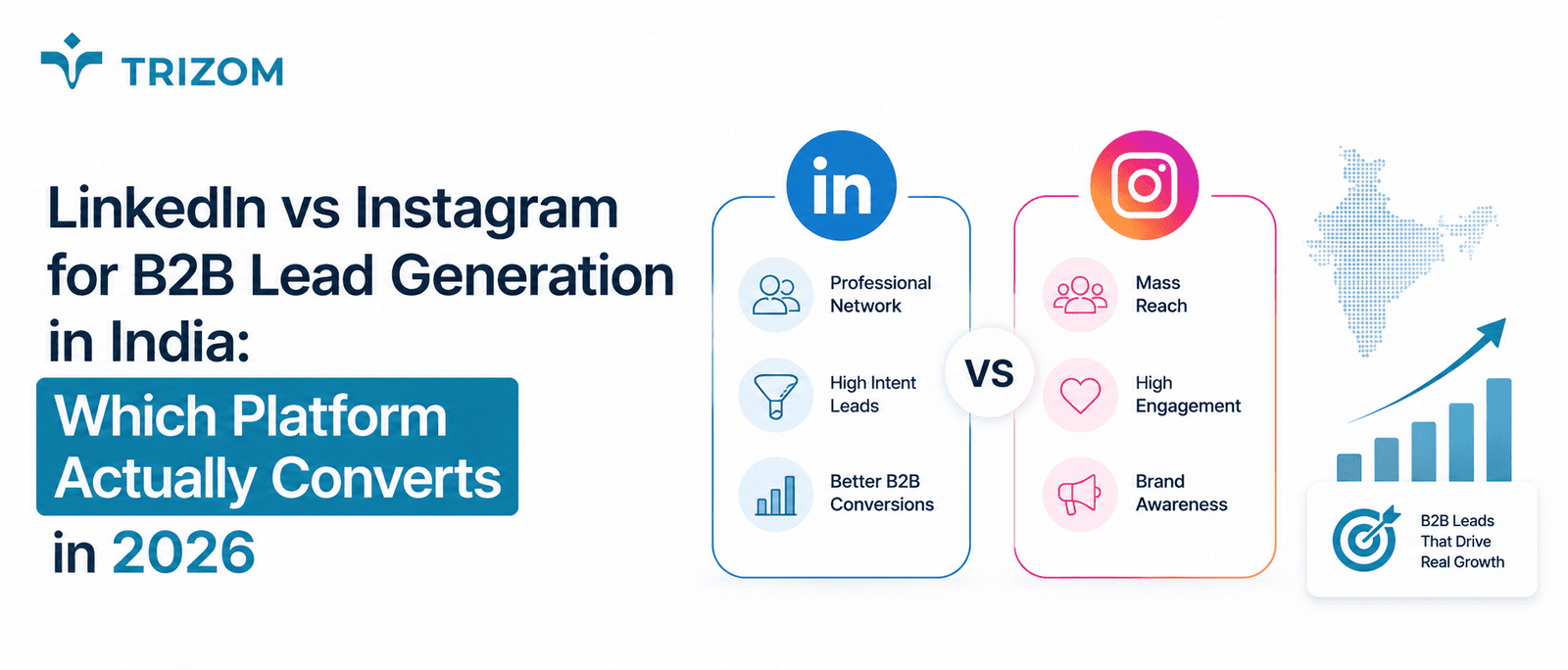
LinkedIn vs Instagram for B2B Lead Generation in India: Which Platform Actually Converts in 2026

LinkedIn marketing for B2B India and Instagram are both fighting for the same slice of your social media budget in 2026, but only one of them is consistently filling pipelines for Indian B2B companies. The question is not which platform has more users. It is which platform puts your brand in front of the person who actually signs the purchase order.

If you are a founder or marketing head sitting with a limited content budget and a very specific buyer in mind, this is the decision that determines whether your social media effort compounds into revenue or evaporates into engagement metrics that impress no one in your boardroom.

Let us settle it properly.

The Core Difference Nobody Talks About

Before comparing features and formats, you need to understand one fundamental distinction between these two platforms.

Instagram is a discovery platform. People open it to be entertained, inspired, and distracted. The intent is passive.

LinkedIn is a professional intent platform. People open it to learn, to network, to evaluate vendors, and to stay visible in their industry. The intent is active.

For B2B social media strategy in India, this distinction is everything. You are not selling a product someone buys on impulse. You are selling a solution that a committee of three to seven people will evaluate over several weeks or months. The platform where that evaluation happens matters more than the platform where your reel gets the most views.

The Case for LinkedIn Marketing for B2B in India

Decision Maker Targeting That Actually Works

Decision maker targeting on LinkedIn is unmatched by any other social platform available to Indian B2B marketers in 2026.

You can filter your content and paid reach by job title, seniority level, company size, industry, and geography. This means a manufacturing automation company in Pune can put its content directly in front of production heads and plant managers at mid-size factories across Maharashtra, without a single rupee being spent reaching someone who has no buying authority.

LinkedIn company page optimisation combined with consistent thought leadership content from the founders and senior team creates a compounding credibility effect. Decision makers research vendors on LinkedIn before they ever fill out a contact form. If your company page looks inactive and your leadership team has no presence, you have already lost the shortlist consideration before the conversation started.

Thought Leadership Converts Longer Sales Cycles

Thought leadership on LinkedIn India is particularly powerful for B2B companies with long sales cycles because it keeps your brand visible throughout the evaluation period without requiring a hard sell at every touchpoint.

A well-structured B2B content calendar for LinkedIn that mixes industry insights, problem-focused posts, behind-the-scenes credibility content, and client outcome narratives builds the kind of sustained familiarity that shortens the time between first contact and signed contract.

LinkedIn lead generation in India in 2026 is not just about direct messages and connection requests. It is about being the brand a decision maker has already seen twelve times before your sales team ever picks up the phone.

LinkedIn Sales Navigator for Precision Outreach

For B2B companies with a defined ICP, LinkedIn Sales Navigator in India remains one of the highest ROI prospecting tools available. The ability to build targeted account lists, track buyer signals, and engage warm prospects before a formal outreach sequence gives your sales team an edge that no Instagram strategy can replicate.

The Case for Instagram for B2B Companies in India

Brand Humanisation and Top of Funnel Awareness

Instagram for B2B companies is not useless. It is just misunderstood.

Instagram works exceptionally well for B2B brands that need to build human connection and cultural credibility before a decision-maker is ready to engage on a professional level. If your buyers are younger founders, startup operators, or growth-stage business leaders who spend more time on Instagram than LinkedIn, dismissing the platform entirely is a strategic mistake.

Organic social media growth in India on Instagram is particularly strong for B2B companies in creative industries, technology, design, and professional services where the visual demonstration of work quality builds trust faster than a written case study.

Social Media ROI for B2B on Instagram

The challenge with measuring social media ROI for B2B on Instagram is attribution. The path from an Instagram Reel to a signed service agreement is longer and harder to track than a LinkedIn post that generates a direct message from a procurement manager.

This does not mean Instagram has no ROI for B2B. It means the ROI is brand equity, not immediate pipeline, and that distinction should determine how much of your B2B content strategy budget it receives.

So Which Platform Should Indian B2B Companies Prioritise in 2026?

The honest answer is that the right platform depends on three variables: who your buyer is, what stage of the funnel you are trying to influence, and what your content team can execute consistently.

However, if you are choosing between the two for primary pipeline impact, LinkedIn marketing for B2B in India wins decisively for the following reasons:

Your buyer is on LinkedIn with professional intent; they are not scrolling LinkedIn to be entertained. They are there to stay informed and evaluate options in their industry. That is the exact mindset you want to reach.

Social media marketing for manufacturers in India, IT services companies, logistics firms, consulting practices, and SaaS businesses all show stronger direct lead attribution from LinkedIn than from Instagram, precisely because the platform context matches the buying context.

Engagement rate on B2B social matters less than engagement quality. One comment from a CFO on a LinkedIn post is worth more to your pipeline than 400 likes on an Instagram carousel from an audience of mixed intent.

LinkedIn company page optimisation combined with personal brand content from founders is currently the most underutilised and highest returning organic social strategy available to Indian B2B companies.

Use Instagram to build brand familiarity and human connection. Use LinkedIn to build pipeline.

How Trizom Builds Social Media Strategies That Generate B2B Leads

At Trizom, our B2B social media strategy in India is built around one principle: every piece of content must serve a stage in your buyer journey, not just an algorithm.

We build platform-specific content calendars for LinkedIn and Instagram, optimise your company page for social media lead generation in India, develop thought leadership frameworks for your founding team, and track engagement quality metrics that actually correlate with pipeline rather than vanity numbers.

If your social media effort is generating impressions but no conversations, we need to talk.

Conclusion

LinkedIn marketing for B2B India is the clear frontrunner for direct pipeline impact in 2026, while Instagram plays a valuable supporting role in brand building and top-of-funnel awareness. For Indian B2B companies with limited budgets and specific buyers, investing in a disciplined LinkedIn strategy with strong thought leadership content, optimised company presence, and targeted social media lead generation in India will consistently outperform a scattered approach across both platforms. Choose your primary platform based on where your buyer makes professional decisions, not where they spend the most leisure time.

Want a social media strategy that actually fills your B2B pipeline?
Talk to Trizom Today

Frequently Asked Questions

Loader image

Effective LinkedIn lead generation in India combines four elements: a fully optimised LinkedIn company page that clearly communicates your value proposition, consistent thought leadership content from founders and senior team members that addresses your buyer's pain points, a structured B2B content calendar that maps content to different stages of the buyer journey, and proactive outreach through connection requests, direct messages, and LinkedIn Sales Navigator for precision prospecting. Consistency over 90 days on LinkedIn produces measurably better pipeline results than sporadic posting.

The highest performing content formats for B2B social media strategy in India on LinkedIn include founder-led opinion posts addressing industry pain points, client outcome narratives that demonstrate results without being overtly promotional, educational carousel posts that break down complex problems, and behind-the-scenes content that builds human credibility. On Instagram, short-form video content, team culture posts, and visual case study carousels perform best for organic social media growth in India. Both platforms reward consistency and specificity over production value.

LinkedIn marketing for B2B India can be pursued organically at near-zero cost through consistent content publishing and engagement, making it one of the highest ROI channels available to Indian B2B companies with limited budgets. LinkedIn paid advertising, including Sponsored Content and Message Ads, typically costs between ₹400 and ₹900 per click in India depending on audience targeting parameters. LinkedIn Sales Navigator subscriptions start at approximately ₹5,000 to ₹7,000 per month per user. For most B2B companies starting, an organic-first approach combined with selective paid amplification of high-performing posts delivers the strongest social media ROI for B2B in the early stages.

Most B2B companies in India begin seeing meaningful social media lead generation results from LinkedIn within 60 to 90 days of consistent, strategic content publishing. The first 30 days are typically focused on building an audience, optimising the company page, and establishing a content rhythm. Days 30 to 60 see growing engagement rate on B2B social content as the algorithm begins distributing posts to relevant professional audiences. By day 90, companies with a clear ICP, strong thought leadership content, and active founder presence typically begin receiving inbound connection requests, direct message enquiries, and profile visits from target buyers. Sustained pipeline impact compounds significantly beyond the six-month mark.